















01
Already carbonated drinks
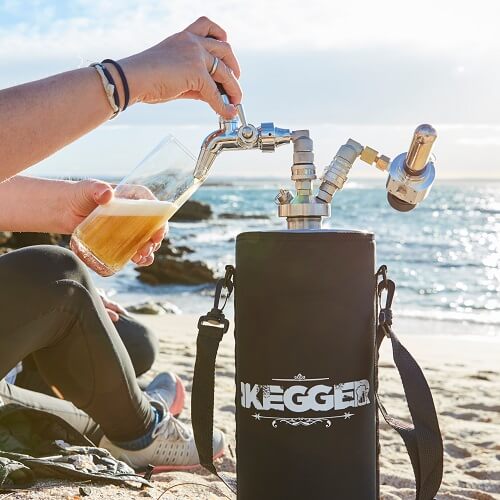
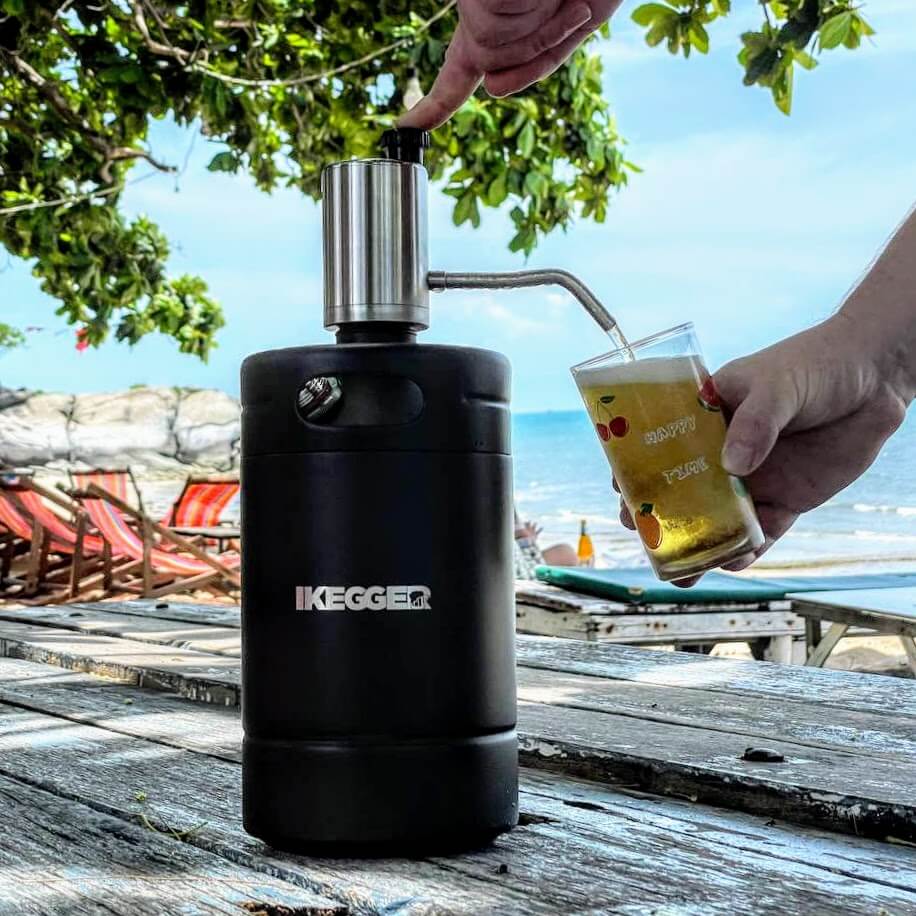
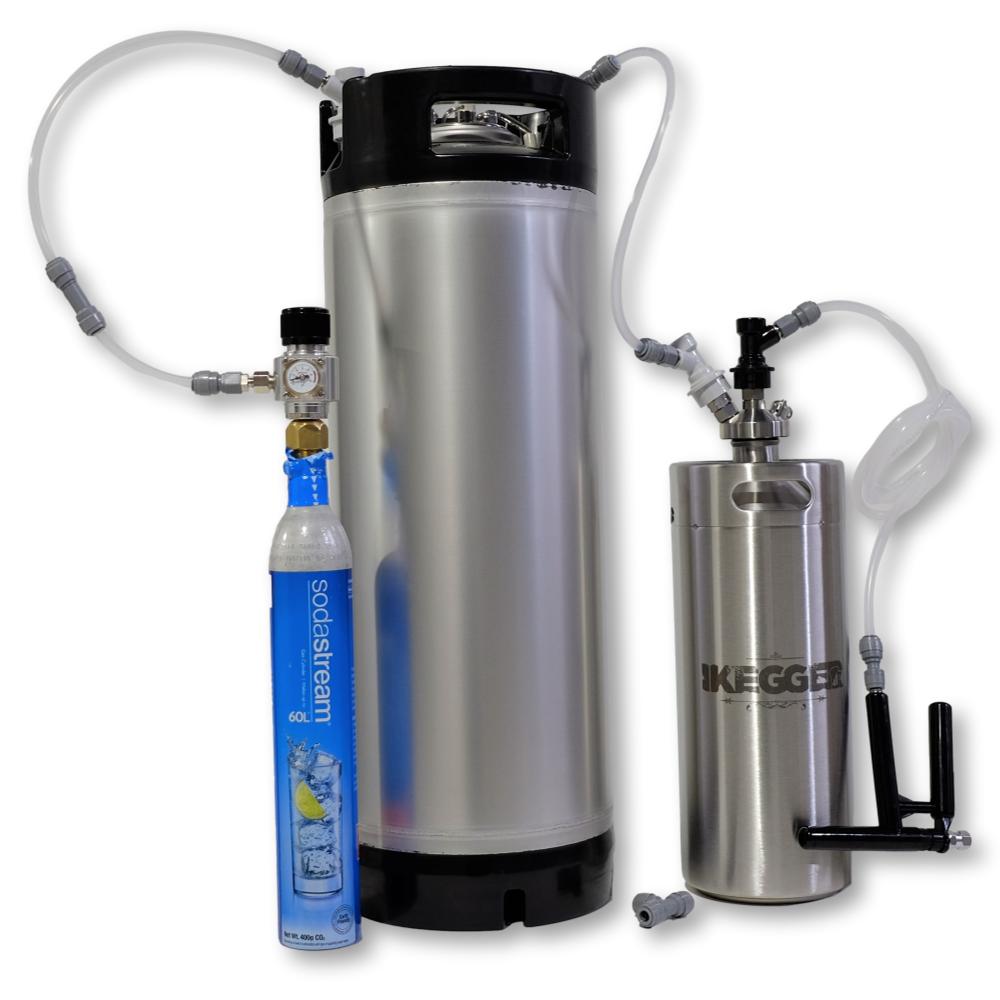
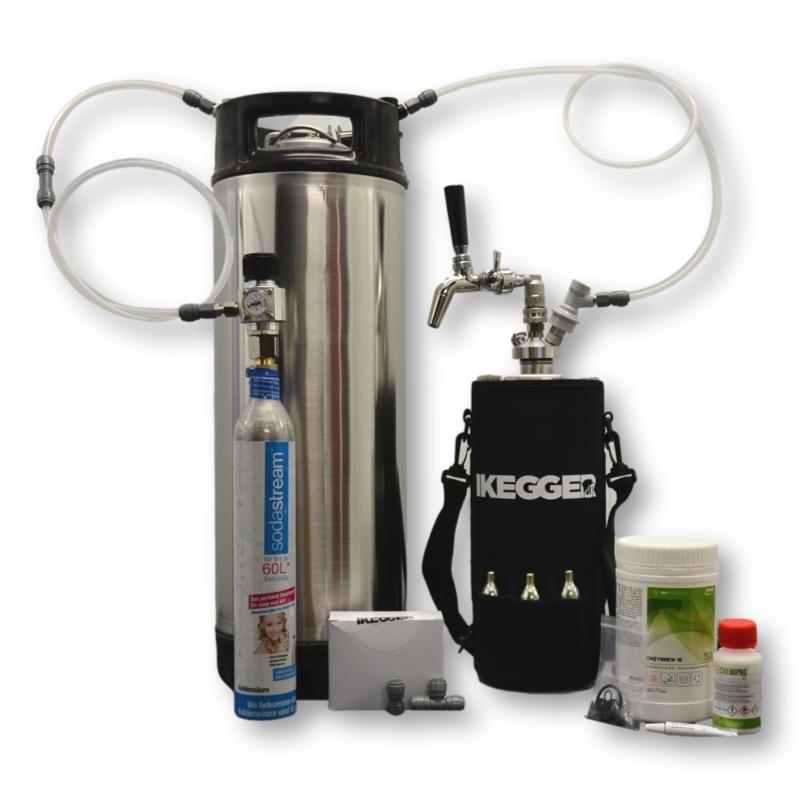
Beer refills, cider and mixed drinks served or stored from a keg.

iKegger Guide
This guide explains how CO₂ pressure, temperature and time affect carbonation when storing, serving or carbonating drinks in a keg.
Applies to
Start with the drink type below, then use the pressure and temperature guide to set your keg correctly.
Beer refills, cider and mixed drinks served or stored from a keg.
Flat beer that needs controlled carbonation before serving.
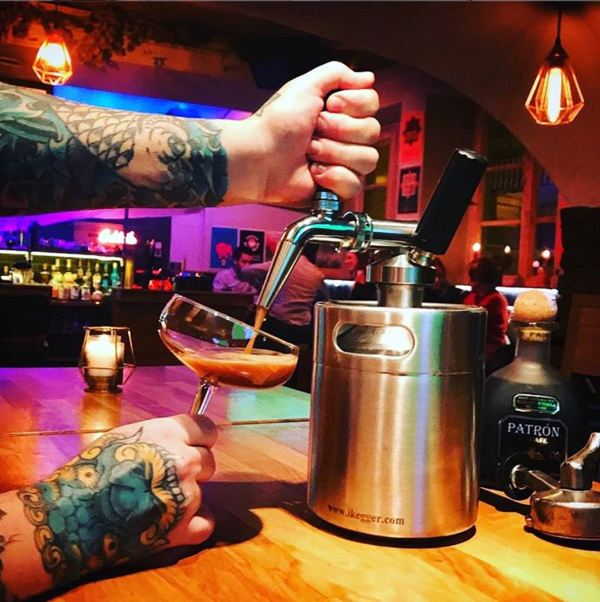
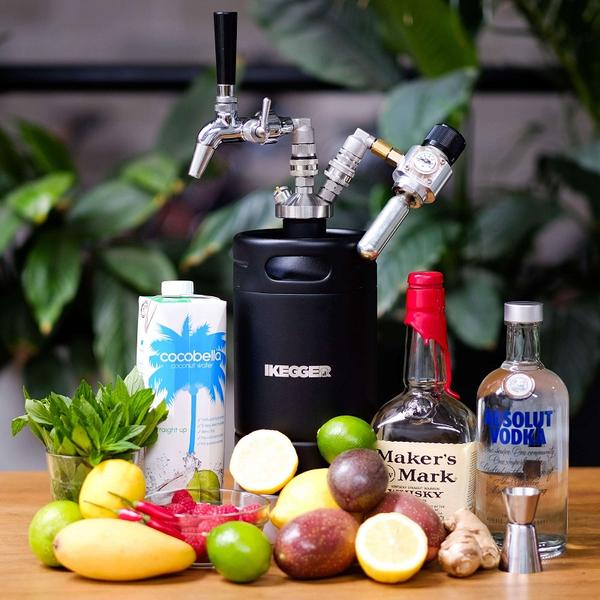
Soda water, rum and coke, cocktails and other higher-carbonation drinks.
Beer carbonated during fermentation with a spunding valve.
iKegger mini kegs, growlers and other pressurised vessels.
Quick Start
For many beers stored cold in a fridge, a good starting point is around 9–13 PSI at 5 °C. The correct pressure always depends on the drink temperature and the carbonation level you want.
| Drink / use case | Typical pressure or range |
|---|---|
| Most beers at 5 °C | 9–13 PSI |
| Lagers, ales and amber beers | around 2.5 volumes CO₂ |
| Soda water and mixers | higher carbonation, orange range in the chart |
| Pressure fermentation at 24 °C | around 29 PSI for beer carbonation |
CO₂ Basics
Carbonation is the process of dissolving CO₂ into liquid. In a keg, the liquid absorbs CO₂ from the gas space above it.
Cold liquid absorbs CO₂ faster and keeps more CO₂ dissolved.
Higher CO₂ pressure pushes more gas into the liquid and speeds up absorption.
Shaking or rolling a keg increases the contact area between liquid and gas.
At a fixed temperature and pressure, the drink stops absorbing CO₂ once balance is reached.
Force carbonation
The fastest way to carbonate a flat drink is to chill it, apply high CO₂ pressure and shake or roll the keg.
This works because shaking increases the contact area between CO₂ and liquid, so CO₂ is absorbed faster.
The more accurate method is to choose the carbonation level you want, then store the keg at the matching temperature and pressure.
This method uses the carbonation table to match drink temperature, desired carbonation level and required CO₂ pressure.
Carbonation table
Use the chart below to find the correct CO₂ pressure for your drink temperature and target carbonation level.
For a typical beer at 5 °C, this usually means setting the regulator to around 9–13 PSI.
Timing & serving
With the controlled set-and-wait method, a chilled 19 L keg usually takes about one week to carbonate.
Smaller kegs often carbonate faster, but there is no fixed time. Carbonation time depends on keg size, liquid temperature, pressure setting, headspace and whether the keg is shaken, rolled or left still.
Yes. You can taste the drink during carbonation to check the level. Once it is carbonated enough, you can either leave the regulator attached or disconnect it until serving.
Regulator
Yes, you can leave the regulator connected and turned on. Once the drink reaches the set carbonation level, the regulator will only add more gas when pressure drops. This usually happens when you pour liquid from the keg.
Leaving the regulator connected keeps the serving pressure and carbonation level stable. Disconnecting the regulator does not normally save gas unless there is a leak in the system.
Important note
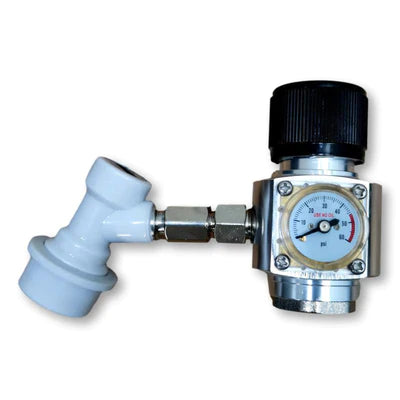
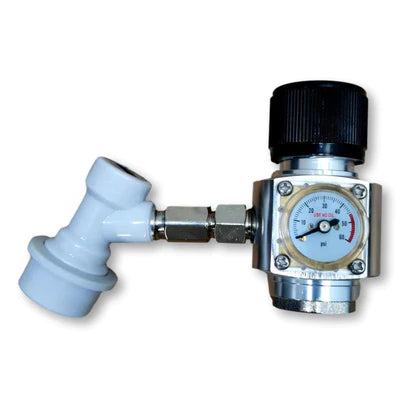
If you use a check valve, the regulator gauge may not show the actual pressure inside the keg. The gauge shows the pressure between the regulator and the check valve.
If the pressure inside the keg rises because the keg warms up, that pressure may not show on the regulator because the check valve prevents gas from flowing back.
Use a check valve when needed, especially when the keg is lying down. For accurate pressure adjustment, avoid relying on the regulator gauge alone when a check valve is installed.
Pressure fermentation
Pressure fermentation allows beer to carbonate during fermentation by using the CO₂ naturally produced by the yeast.
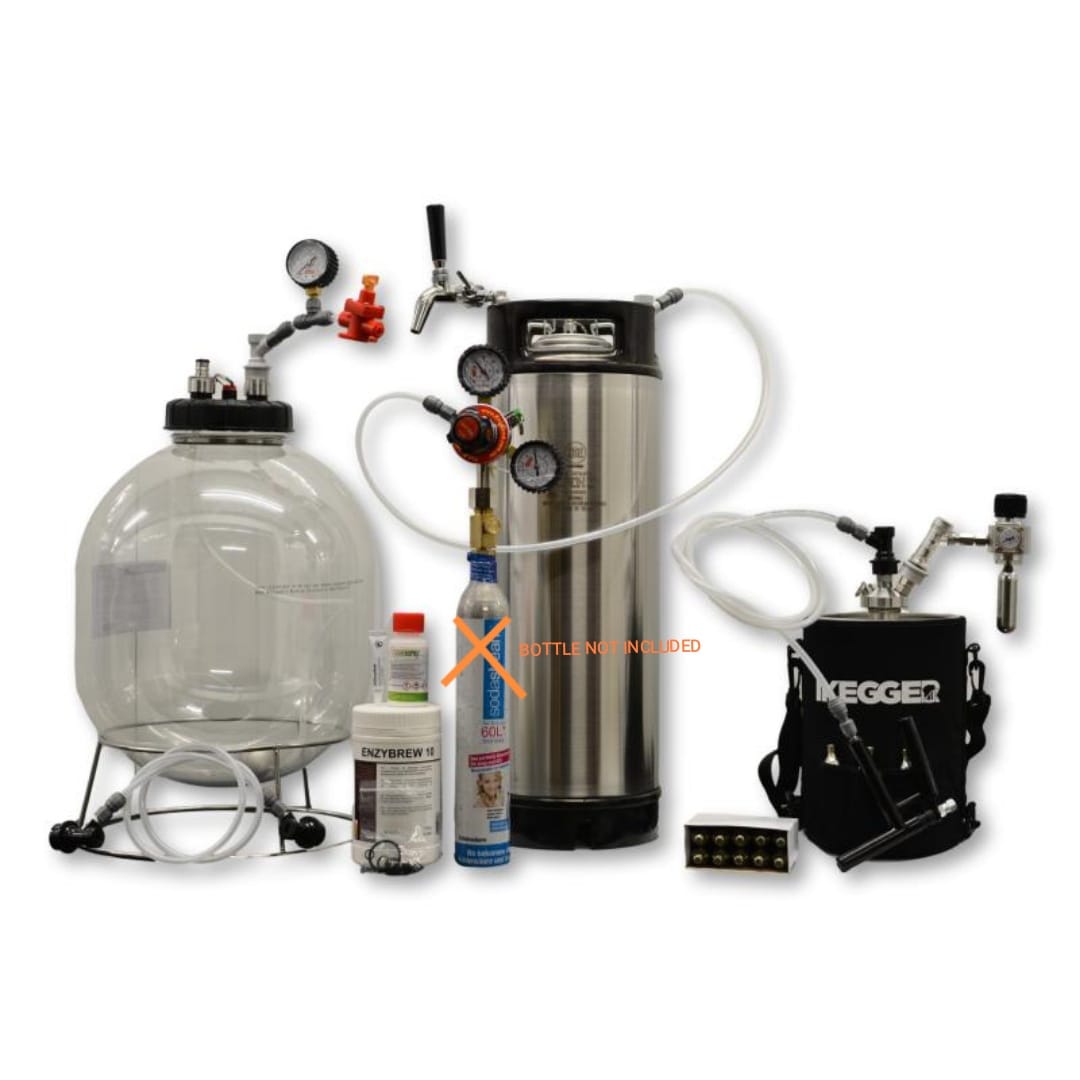
This is useful when brewing in a pressure-capable fermenter such as a FermZilla, Fermentasaurus or King Jr.
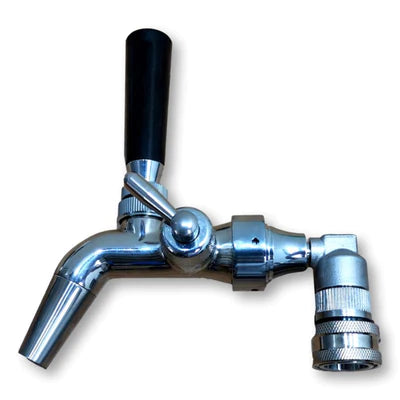
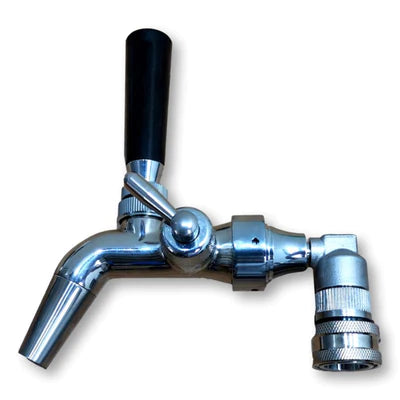
After fermentation, you only need to chill the beer and either attach a tap or transfer it to a keg for serving.
Quick answers
For many beers stored at around 5 °C, set the regulator to about 9–13 PSI.
Shaking increases the contact area between liquid and CO₂, so the liquid absorbs CO₂ faster.
At a fixed temperature and pressure, the drink stops absorbing CO₂ once it reaches balance.
Usually not. Disconnecting only saves gas if there is a leak in the system.
Pressure transfer
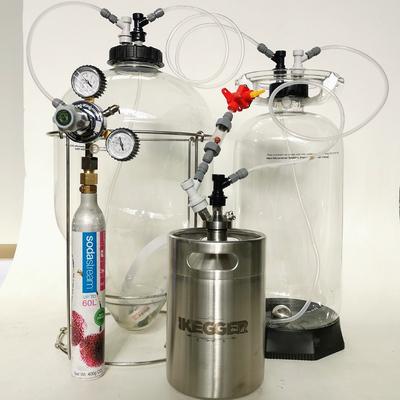
Use pressure transfer when moving liquid from fermenter to keg or from keg to keg. This keeps the system closed and lets you move the drink with controlled pressure.
Watch the condensation line on the outside of the empty keg rising.
Place the empty keg on a zeroed set of scales and use the fact that 1 litre of liquid weighs 1 kg.
Use a flow stopper with the spunding valve. This automatically stops the flow once the keg is full.
